
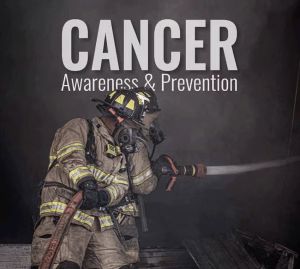
 January is Firefighter Cancer Awareness month and throughout the month, we will be highlighting different topics with the hope that it will increase situational awareness. Today, cancer is the leading cause of death among active and retired firefighters combined.
Cancer risks and exposures can happen anywhere, not just on fire grounds. However, as a firefighter exposures happen at a much higher frequency. By adopting repeatable behaviors throughout your career, you build cancer prevention habits that can make a difference in the long run. 30 years ago, the first thought on a medical wasn’t to put on gloves before administering patient care. Now it is the standard. Our hope is that over time, prevention becomes second nature and it happens without you even thinking about it.
Part of that starts before the call within the fire station itself.
- Set boundaries within the department for areas where turnout gear cannot be worn. It’s an easy way to keep contaminated gear from entering living quarters and office areas.
- If your department has exhaust systems for apparatus in the bay, use them. They aren’t just decoration.
- If you have workout gear, icemakers, or vending machines housed in the bay area, see if there is a feasible place to relocate them to. Diesel exhaust can linger in the bays long after the truck is returned to service and can be absorbed by the products in the vending and ice machines, which are then absorbed with human consumption. And if you are working out near the trucks, your body and lungs are directly exposed to exhaust. If you can’t move the workout gear, try to make it a habit to work out with the bay doors open so for ventilation.
- If your gear rack is located on the living quarters side of the station, see if it’s possible to move it to another area. Ideally, gear would be immediately cleaned or taken out of service, but we know that simply isn’t possible for every department. By moving the racks away from living quarters and sleeping areas, it will help reduce the amount of off gas coming from the contaminated gear passing into those areas.
- Check your gear for damage. Be familiar with your gear. Know what it does, what it doesn’t do, and what it is rated for. If your gear is damaged, report it. It won’t do favors for anyone if you are on a call with damaged gear.
We are very much aware that this is not a cumulative list, and it is not intended to be. We know that it is not feasible for all departments to do some of these things. It is just a conversational starting point towards situational awareness of exposures often not thought about within the firehouse. Just because you are no longer on a call doesn’t mean you need to lower your guard. No matter how many policies and procedures are implemented by your agency, remember your health is ultimately in your hands and small actions in reducing exposure can lead to big rewards.